


A website stops loading, an employee cannot access a company server, or a cloud application becomes unusually slow. These problems may look simple to the person experiencing them, but solving them often requires someone who understands how networks actually work.
That is where networking professionals come in.
But with artificial intelligence (AI), cloud computing, and automation changing the IT industry, many students and professionals are asking the same question: Is networking still a good career in 2026, or should beginners focus on a different technology field?
Networking remains a relevant career option, although the work is evolving. Routine configuration and monitoring tasks can increasingly be automated, while organizations still need people who can troubleshoot complex failures, secure connections, design infrastructure, and understand how systems communicate.
For beginners in India, networking can provide a route into IT support, network operations, engineering, cybersecurity, and cloud infrastructure. The right path depends on your interests, practical skills, location, and willingness to keep learning.
This guide examines networking jobs, salary expectations, essential skills, certifications, a practical troubleshooting exercise, and the future of computer networking in 2026.
What Is Computer Networking?
Computer networking is the practice of connecting computers, servers, mobile devices, and other systems so they can exchange information. These connections may exist within a home, an office, a data center, or a cloud environment.
Consider what happens when you open a website. Your device needs a network connection, the website’s domain name must be resolved, and data must travel between your device and the destination server. Routers, switches, network protocols, and other technologies help make that communication possible.
Networking professionals build, configure, monitor, secure, and troubleshoot these systems. Their work helps organizations keep applications accessible, employees connected, and information moving between systems.
The field now extends beyond physical routers, switches, and cables. It also includes wireless networks, virtual cloud networks, software-defined networking, network automation, and connectivity for large computing environments.
Understanding these fundamentals is useful even if you eventually specialize in cloud engineering or cybersecurity. Both fields depend on reliable communication between systems.
Is Networking Still a Good Career in 2026?
Yes, networking can be a good career in 2026, but the opportunities depend on the role and the skills you develop.
A useful way to understand the market is to distinguish between traditional administration and more specialized engineering work.
The US Bureau of Labor Statistics projects that employment for network and computer systems administrators will decline by 4% between 2025 and 2035. However, it projects 8% growth for computer network architects over the same period. The two occupations involve different responsibilities, and the figures apply to the US rather than the Indian job market. What does this mean for someone starting out?
It means you should look beyond the job title alone. Some organizations need people to maintain existing infrastructure, while others need engineers who can plan network changes, connect cloud services, improve security, and automate repetitive work.
Networking is not a guaranteed shortcut to a high-paying job. It is a technical field in which practical experience and the ability to solve problems can make a meaningful difference.
Why Companies Still Need Networking Professionals
Reliable connectivity: Businesses depend on networks to access applications, communicate with customers, and share information. A connectivity problem can interrupt several departments at once.
Cloud infrastructure: Applications may run in the cloud, but users and services still need secure, reliable routes to reach them. Cloud migration changes the network design rather than eliminating the need for networking.
Cybersecurity: Network knowledge helps professionals understand traffic, control access, configure firewalls, and investigate suspicious connections.
Automation and AI infrastructure: Automated systems can handle repetitive tasks, while high-performance computing environments require careful network planning, monitoring, and troubleshooting.
These developments do not mean that every networking specialization will grow at the same rate. They do show why learning networking fundamentals can support several different IT career paths.
Top Networking Jobs in 2026
Networking includes entry-level support positions as well as specialist and senior engineering roles. Understanding their differences can help you choose a realistic starting point.
1. Network Support Engineer
Network support engineers investigate connectivity problems, assist users, check device configurations, and escalate complex incidents when necessary.
Skills to build: IP addressing, DNS, DHCP, TCP/IP, basic routing, and systematic troubleshooting.
Suitable starting point: Beginners who enjoy solving technical problems and explaining solutions clearly.
2. Network Administrator
Network administrators maintain an organization’s existing network infrastructure. They may manage devices, monitor performance, document configurations, review access permissions, and support network changes.
Skills to build: Routing and switching fundamentals, network monitoring, documentation, access management, and basic security.
Career direction: Network engineering, infrastructure operations, or IT administration.
3. Network Engineer
Network engineers configure, test, and troubleshoot network infrastructure. Depending on the role, they may work with VLANs, routing protocols, wireless networks, firewalls, VPNs, and wide-area connectivity.
For example, an engineer might investigate why two office locations cannot communicate after a routing change. Solving the problem requires more than restarting a device: the engineer must examine the network path, configuration, and relevant logs.
Skills to build: Routing, switching, subnetting, network design, and fault isolation.
4. Network Security Engineer
Network security engineers focus on protecting network infrastructure. Their work may include configuring firewall policies, segmenting networks, reviewing traffic, and helping investigate security incidents.
Skills to build: Networking fundamentals, access control, firewall management, traffic analysis, and security monitoring.
This path may suit people who enjoy understanding how attacks occur and how infrastructure can be protected.
5. Cloud Network Engineer
Cloud network engineers work with virtual networks and connectivity between cloud services, applications, and on-premises infrastructure.
They may configure subnets, routes, private connections, security rules, and connectivity between different environments.
Skills to build: Routing and IP addressing, virtual networks, cloud access controls, troubleshooting, and knowledge of a platform such as AWS or Microsoft Azure.
6. Network Automation Engineer
Network automation engineers use scripts, APIs, and automation tools to manage infrastructure more consistently and reduce repetitive manual work.
Imagine a team that needs to apply the same approved configuration to dozens of network devices. Automation can reduce repetitive effort, but engineers still need to validate changes and investigate unexpected results.
Skills to build: Networking fundamentals, Python, APIs, version control, and configuration management.
7. Network Architect
Network architects plan how an organization’s network should be designed to meet its requirements for capacity, security, reliability, and future growth.
These roles generally require experience in network engineering or related infrastructure work. They are usually a longer-term career goal rather than a first job.
Skills to build: Advanced networking, architecture, risk assessment, capacity planning, and technical communication.
Network Engineer Salary in 2026
Salary is an important consideration, but networking salaries cannot be represented accurately by one number. Earnings vary by country, city, experience, employer, job responsibilities, and specialization.
For India, Indeed’s network engineer salary page reported an average base salary of approximately ₹21,208 per month, updated on July 27, 2026, based on 120 reported salaries. Treat this as a snapshot of that dataset, not a guaranteed starting salary or a definitive national average. Check the latest Indeed India salary data before publishing, because reported estimates can change.
For international context, the US Bureau of Labor Statistics reported the following median annual wages for May 2025:
| US occupational category | Median annual wage |
| Network and computer systems administrators | $99,130 |
| Computer network architects | $134,050 |
These figures represent different US occupational categories. They are not Indian salary estimates, and they should not be interpreted as entry-level network engineer salaries.
What Can Influence Your Salary?
Several factors can affect your earning potential:
- Experience: Employers may expect junior professionals to handle basic troubleshooting, while experienced engineers may take responsibility for network design and complex incidents.
- Specialization: Cloud networking, network security, automation, and architecture involve different skill requirements and job markets.
- Location and employer: Compensation can differ considerably between cities, industries, and organizations.
- Practical ability: Demonstrating that you can diagnose problems, explain your reasoning, and document changes can strengthen your job applications.
- Certifications: Relevant credentials may help demonstrate knowledge, but they do not guarantee a job or a particular salary.
If you are comparing opportunities, review several current job listings for the same role and location. Compare the required experience, technologies, responsibilities, and advertised pay rather than relying on a single average.
Skills You Need for a Networking Career in 2026
You do not need to master every networking technology before applying for your first job. Begin with the concepts that explain how devices communicate, then develop practical skills through exercises and projects.
Essential Networking Fundamentals
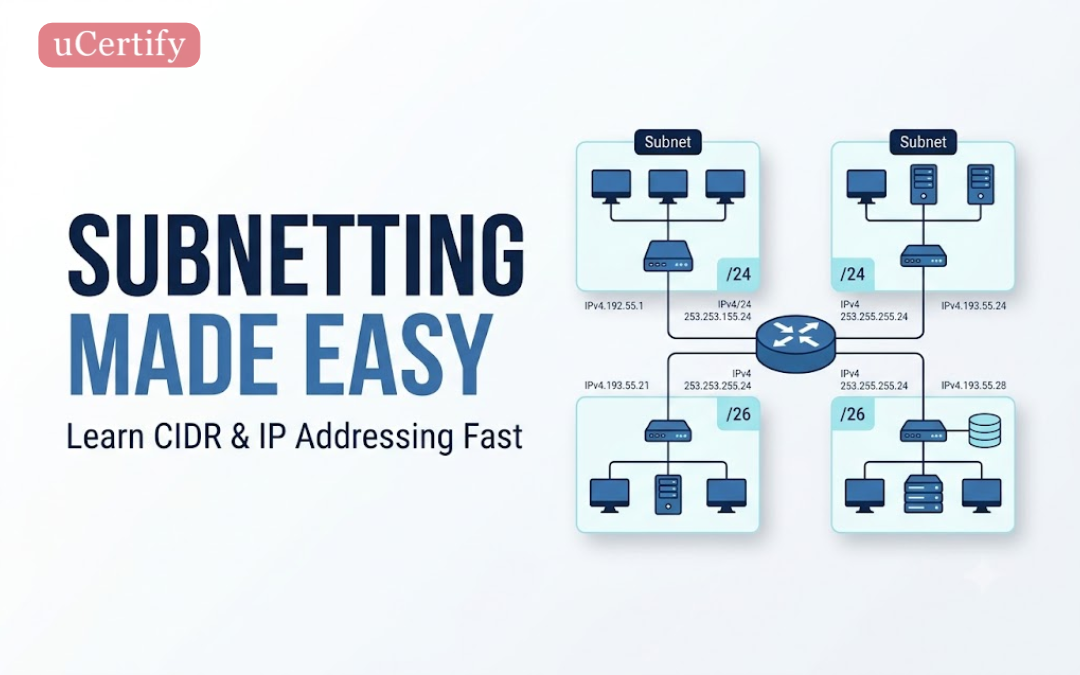
IP addressing and subnetting: Understand how devices are addressed, how subnet masks define network boundaries, and how CIDR notation represents address ranges.
TCP/IP and common protocols: Learn how communication works and why protocols such as TCP, UDP, DNS, and DHCP matter.
Routing and switching: Understand how switches connect devices within local networks and how routers forward traffic between networks.
Network security: Learn the purpose of firewalls, VPNs, access controls, and network segmentation.
Troubleshooting: Develop a method for checking connectivity, gathering evidence, testing possible causes, and documenting results.
Skills That Can Help You Specialize
Once the fundamentals are clear, choose additional skills based on the career you want.
- Cloud networking: Learn virtual networks, routes, subnets, and cloud security rules.
- Network security: Practice analyzing traffic, reviewing firewall policies, and understanding access control.
- Automation: Use Python or APIs for small tasks involving network data or configuration.
- Monitoring: Learn how to interpret logs, performance metrics, and alerts.
- Communication: Practice documenting incidents and explaining technical problems in plain language.
The order matters. If you cannot explain IP addressing or trace a basic connection, jumping straight into advanced cloud networking may make learning more difficult.
Practical Example: How to Troubleshoot a Website That Will Not Load
Suppose a user reports that a website will not open on their laptop. Other applications appear to work, and the user assumes the internet connection is broken.
A network professional should avoid guessing. Instead, they can investigate the problem step by step.
Step 1: Check the device’s network configuration. Confirm that the laptop has an appropriate IP address, subnet mask, default gateway, and DNS server.
Step 2: Test local connectivity. Check whether the device can communicate with its default gateway. If this fails, investigate the local connection, wireless access, addressing, or gateway configuration.
Step 3: Test connectivity beyond the local network. Where permitted, test access to a known reachable external IP address. A successful test suggests that some external connectivity is working, although it does not prove that every route or service is healthy.
Step 4: Check DNS resolution. Try resolving the website’s domain name. If name resolution fails while connectivity by IP address works, DNS becomes an important area to investigate.
Step 5: Record the findings. Document the tests, results, time of the incident, and any changes made. This helps another technician continue the investigation if needed.
This is a simplified exercise, not a complete diagnostic procedure. Firewalls, proxies, routing problems, server failures, and application issues can produce similar symptoms. The point is to test one part of the connection at a time rather than changing several settings without evidence.
Exercises like this help beginners develop a useful professional habit: explain what each test proves, what it does not prove, and what should be checked next.
Best Networking Certifications to Consider in 2026
A certification can provide a structured learning path and demonstrate knowledge to employers. Choose one that matches your current experience and target role.
CompTIA Network+
Network+ is worth considering if you want vendor-neutral networking fundamentals. It can help structure your study of network concepts, operations, troubleshooting, and security.
It is a reasonable option for learners who want broad foundational knowledge before choosing a specialization.
Cisco CCNA
The Cisco Certified Network Associate (CCNA) certification is relevant to learners targeting network support and engineering roles, particularly those involving Cisco technologies.
Its official exam topics include networking fundamentals, connectivity, network services, security, and network operations. Review the current official CCNA exam topics before planning your study.
Cloud Certifications
If you want to work with cloud infrastructure, consider a certification aligned with the platform used by your target employers. First understand routing, addressing, DNS, and access control, then apply those concepts to cloud environments.
Security-Focused Certifications
If network security interests you, start with the fundamentals and choose a security credential that matches your experience. Advanced certifications may assume prior networking or security knowledge, so check the prerequisites before committing.
Before paying for an exam, review current job descriptions. A certification is most useful when it supports the knowledge and skills required by the roles you actually want.
How to Start a Networking Career With No Experience
A beginner does not need an expensive home lab or a long list of certifications to begin learning. A structured plan and evidence of practical work are a more useful starting point.
Step 1: Learn the Fundamentals
Study IP addressing, subnetting, DNS, DHCP, routing, switching, and common network protocols. Make sure you can explain the concepts in your own words.
Step 2: Practice in a Lab
Use a network simulator, virtual lab, or available training environment to configure devices and test connectivity. Start with small topologies before moving to more complex designs.
Step 3: Build Two or Three Small Projects
For example, create a small office network design, develop an IP addressing plan, or troubleshoot a simulated DNS issue. Record the objective, steps, results, and lessons learned.
Step 4: Choose a Relevant Certification
Select Network+, CCNA, or another suitable credential based on your knowledge and career target. Avoid treating certification as a substitute for practical experience.
Step 5: Apply for Entry-Level Roles
Search for network support, junior network engineering, IT support, and network operations center (NOC) positions. Read each description carefully because titles and responsibilities vary by employer.
Prepare to discuss basic networking concepts and explain how you would investigate a connectivity problem.
Step 6: Specialize After Building a Foundation
As you gain experience, decide whether you prefer network engineering, cloud networking, cybersecurity, or automation. You can then invest in deeper training that supports that direction.
What Is the Future of Computer Networking?
Networking is evolving alongside cloud adoption, cybersecurity, automation, and increasingly demanding computing workloads. These changes create opportunities, but they also raise expectations about what networking professionals should know.
Cloud Networking
Organizations need connectivity between users, applications, cloud services, and existing infrastructure. Understanding both traditional networking and virtual networks can help professionals work across these environments.
Network Security
Reliable connectivity is not enough if unauthorized users can access systems or sensitive data. Knowledge of access control, segmentation, firewalls, and traffic analysis can support careers that combine networking and security.
Automation and AI-Assisted Operations
Automation can standardize routine configuration and help teams identify issues more quickly. AI-assisted tools may also help interpret alerts or suggest troubleshooting steps.
However, automated recommendations need to be checked. A network engineer must still understand the environment, assess risk, verify changes, and investigate failures when the suggested fix does not work.
High-Performance Computing and AI Infrastructure
Some computing environments move large volumes of data between servers and storage systems. Their networks must be designed to meet performance, reliability, and capacity requirements.
This is a specialized area, not a requirement for every network professional. It is an example of how networking knowledge can apply to newer infrastructure challenges.
The practical lesson is that traditional networking fundamentals remain useful, but professionals should be prepared to apply them in environments that increasingly rely on software, automation, and cloud services.
Is Networking Better Than Other IT Career Paths?
There is no universal winner between networking, software development, cybersecurity, and cloud engineering. The right choice depends on the type of work you want to do.
| Career path | Main focus | A useful starting skill |
| Networking | Connectivity, routing, switching, troubleshooting | IP addressing and subnetting |
| Software development | Building and maintaining applications | Programming fundamentals |
| Cybersecurity | Protecting systems, data, and access | Security fundamentals and networking |
| Cloud engineering | Deploying and operating cloud infrastructure | Linux, networking, and cloud basics |
| Network automation | Managing infrastructure through scripts and tools | Networking fundamentals and Python |
These fields overlap. Networking knowledge can help a cybersecurity analyst understand suspicious traffic, while cloud engineers need to understand connectivity between services.
If you enjoy tracing problems, working with infrastructure, and understanding how systems communicate, networking may be a good fit. If you prefer building applications, software development may be more appealing. If you enjoy investigating threats, consider cybersecurity. You can also combine networking with cloud or security skills over time.
Frequently Asked Questions
Is networking a good career for beginners in 2026?
Yes, it can be a practical entry point into IT. Learn the fundamentals, practice through labs, document projects, and apply for roles that match your experience. Job requirements vary, so review local listings before choosing a learning path.
Will AI replace network engineers?
AI and automation can reduce repetitive work and assist with monitoring or troubleshooting. However, designing networks, evaluating risk, validating changes, and resolving complex incidents still require technical judgment. Learning automation can help professionals adapt to changing responsibilities.
Is networking a high-paying career?
Some networking roles offer strong compensation, especially as responsibilities and specialization increase. However, salaries vary by country, employer, experience, and job type. Research current local salary data rather than assuming that every networking job pays the same.
Which networking certification should I take first?
Network+ can provide broad vendor-neutral fundamentals, while CCNA is worth considering if you are targeting roles that value Cisco networking knowledge. Your current experience and target job should guide the choice.
Can I learn networking without a computer science degree?
It is possible to learn networking through structured study, labs, and certifications. Some employers require or prefer a relevant degree, so check the qualifications listed for your target roles and build practical evidence of your skills.
Is networking better than cloud computing?
They are connected fields rather than direct substitutes. Networking focuses on communication and connectivity, while cloud engineering includes the operation of cloud infrastructure and services. Combining networking knowledge with cloud skills can be useful for infrastructure-focused careers.
Conclusion: Should You Choose Networking in 2026?
Networking remains a viable career path for people who enjoy solving technical problems and are willing to keep their skills current. However, the strongest career plan is not simply to learn a few commands and collect certifications. It is to understand how networks work, practice troubleshooting, and gradually develop skills that match real job requirements.
If you are starting from scratch, begin with IP addressing, subnetting, routing, switching, DNS, and DHCP. Build a small lab, document your work, and choose a certification that supports your target role. Once the fundamentals are solid, explore cloud networking, security, or automation.
Before investing in a course or certification, review job descriptions in your preferred location and identify the skills employers repeatedly request.
Networking is worth considering in 2026—not because every networking job is guaranteed to grow, but because network knowledge can provide a foundation for several evolving areas of IT.



No Comments Yet
Be the first to share your thoughts on this post!